
New visa rules in Montenegro: Entry Requirements from November 1, 2026.

Montenegro has introduced important changes to its visa regime, effective 1 November 2026, as part of the country’s ongoing alignment with European Union regulations. The new visa rules in Montenegro affect citizens of five countries, while several exemptions continue to facilitate travel for international visitors, business partners, and property investors.
Who Is Affected by the New Visa Rules in Montenegro?
Under the new Regulation on the Visa Regime (Official Gazette of Montenegro, No. 158/2026), citizens holding ordinary passports from the following countries are now generally required to obtain a Montenegrin visa before entering the country:
- Russia
- Türkiye
- China
- Saudi Arabia
- Belarus
The changes form part of Montenegro’s broader European integration process and its efforts to harmonize national visa regulations with those of the European Union, particularly in relation to Negotiation Chapter 24 – Justice, Freedom and Security.
Important Exceptions: Who Can Still Enter Montenegro Without a Separate Montenegrin Visa?
Although the new regulations introduce additional visa requirements, several important exemptions remain available.
Citizens of the affected countries may still enter Montenegro without obtaining a separate Montenegrin visa if they hold a valid visa issued by:
- A Schengen Area country
- The United States
- The United Kingdom
- Ireland
- Canada
- Australia
- Japan
- New Zealand
The same exemption applies to travellers holding valid residence permits issued by these countries or the Schengen Area.
Under these arrangements, visitors may stay in Montenegro for up to 30 days, provided that their visa or residence permit remains valid throughout the intended stay. If the supporting document expires earlier, the permitted stay is limited accordingly.
Additional exemptions and specific conditions may apply to holders of certain diplomatic, official, or other special travel documents.
What About Foreign Nationals Already Residing in Montenegro?
Foreign nationals who hold valid, approved Montenegrin temporary residence permits, temporary residence and work permits, or permanent residence permits may continue to enter and reside in the country in accordance with the applicable regulations.
Importantly, a confirmation that a residence permit application has been submitted does not, by itself, constitute an approved residence permit or guarantee re-entry into Montenegro.
Foreign nationals who were legally present in Montenegro when the new rules took effect may continue their stay in accordance with the regulations applicable to their existing legal status.
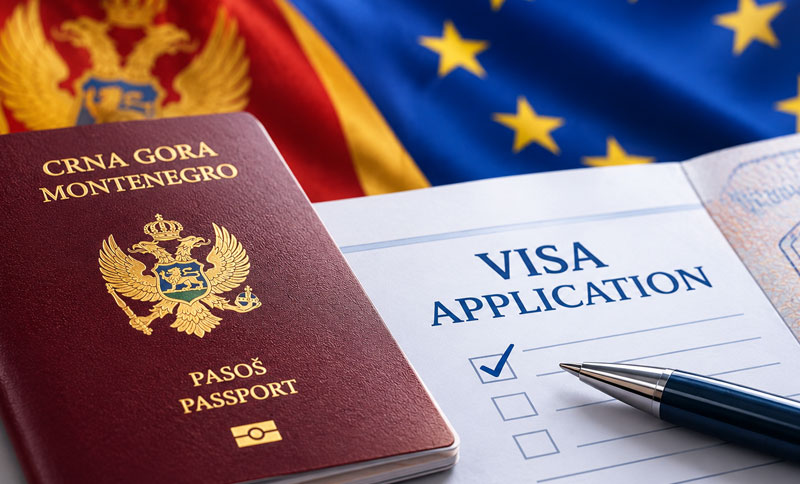
How and Where Can Travellers Apply for a Montenegrin Visa?
To make the visa application process more accessible, Montenegro has expanded its cooperation with VFS Global, an international visa application services provider.
Applications may be submitted through Montenegrin diplomatic and consular missions abroad or through authorized VFS Global Visa Application Centres in countries where the service is available.
The Ministry of Foreign Affairs has announced the expansion of this network, including additional locations intended to improve accessibility for applicants from affected countries.
According to the Ministry’s published guidance:
- Visa applications are generally processed within 10 days, although additional checks may extend processing to 30 or, in certain cases, 60 days.
- Short-stay visa applications (Type C) should be submitted at least 15 days before the planned trip.
- Long-stay visa applications (Type D) should be submitted at least 60 days before the planned trip.
- The standard consular application fee is €35, with additional service charges potentially applicable when using VFS Global.
Visa applications cannot be submitted from within Montenegro.
What Does This Mean for International Property Buyers and Investors?
Montenegro continues to attract international interest thanks to its Adriatic coastline, developing tourism infrastructure, investment opportunities, and progress toward European Union membership.
For international property buyers and investors, the new visa regulations primarily introduce an additional consideration when planning travel to Montenegro.
Clients intending to visit properties, attend business meetings, explore investment opportunities, or complete property-related transactions should verify their entry requirements well in advance.
Those holding qualifying visas or residence permits from the Schengen Area and other recognized countries may still benefit from simplified entry arrangements.
It is also important to distinguish between short-term entry requirements and the separate legal procedures governing temporary residence, employment and property ownership in Montenegro.
Montenegro’s Continued European Integration
The updated visa regime represents another step in Montenegro’s alignment with European Union standards.
As the country progresses toward its EU membership ambitions, regulatory harmonization remains an important part of strengthening its institutional framework and international integration.
For investors and international partners, staying informed about these developments is essential when planning travel and business activities.
At Astra Real Estate, we remain committed to keeping our international clients and partners informed about developments that may affect their experience of Montenegro.
Whether you are planning a property viewing, exploring real estate investment opportunities, or considering Montenegro as a future destination, our team is available to assist with property-related inquiries and help you navigate the local real estate market.
Important notice: Visa regulations and entry requirements may be subject to further amendments. Travellers are advised to verify the latest requirements with the Ministry of Foreign Affairs of Montenegro or the relevant diplomatic mission before making travel arrangements.